Strategy + Storytelling Rooted in Community

Category: Community Blog Post

  • Start With the People, Then Build the Plan

    Start With the People, Then Build the Plan

    The strongest strategies usually don’t start with a document. They begin with a conversation.

    It starts with people being invited to speak honestly, and leaders being ready to hear it. That’s where alignment begins. That’s when trust builds. That’s how plans gain the clarity and momentum they need to last.

    More and more, leaders across the sector are choosing to begin this way.

    • A new executive director who walks through every corner of the organization, asking staff what feels unfinished.
    • A funder who calls partners before launching a new program, asking what’s rising in real time.
    • A board chair who chooses to listen quietly in a community meeting and brings back what they heard without translation.

    This is how strategy becomes something people believe in, not just something they’re told to follow.

    Communities know the difference between being asked to contribute and being trusted to shape what’s next. That difference shows up in how the work moves, who carries it, and whether it feels like a burden or a shared vision.

    Listening isn’t a preliminary step. It’s the foundation.

    When listening is woven into the fabric of strategy building, it opens space for deeper ownership. People feel the shift — not just in words but also in how meetings unfold, roles are defined, and decisions are made. It becomes less about managing input and more about honoring perspective.

    Hearing multiple perspectives — especially those that have historically been left out or flattened — makes strategy not only stronger but also more reflective of the world we’re actually working in.

    This kind of approach isn’t about slowing down. It’s about building better.

    With more care. More inclusion. More depth.

    For organizations or foundations looking to lead this way, the opportunity is here.

    Start with the people. Then build the plan.

    And if support is needed — to facilitate, to document, to translate stories into action — Lovett & Sons is here to help.

    🧡Strategy and Storytelling Rooted in Community.
  • Planning for What’s Next Starts with Who’s Already Here

    Planning for What’s Next Starts with Who’s Already Here

    We talk a lot about building capacity. But in practice, that conversation often skips past the people doing the work every day.

    The local activist finding time between shifts and school pickup. The nonprofit staffer juggling operations, outreach, and storytelling — with little time to rest. The neighborhood-based group solving real problems long before funding ever arrived.

    This is where capacity building has to begin. Not in theory — in real time, with the people who are already doing the work. 

    Trust comes first

    Before we talk about tools or timelines, we need trust — the kind built through listening, consistency, and shared experience.

    Capacity isn’t always about hiring more people or applying for bigger grants. Sometimes, it’s about creating space to collaborate across neighborhoods and sectors. It’s about making room to reflect, not just react.

    When that kind of alignment is in place, the right tools become easier to introduce. One of those tools we’re paying close attention to is AI.

    Let tools support the people

    We’ve seen the headlines, but here’s what matters: AI can support capacity when used with intention. For community-rooted organizations short on time, it can help with things like drafting content, organizing records, or summarizing years of data that’s hard to wrangle.

    It’s not about replacing anyone. It’s about making more room for focus, clarity, and the human work that tech can’t do — like building trust, shaping vision, and showing up.

    Strategy that reflects real life

    A five-year strategic plan written without community input is just another document. But a shared vision shaped by real conversations? That can lead to something lasting.

    Strategy should feel lived-in — something people can use, not just review. At Lovett and Sons, that’s the kind of planning we help build.

    What we’ve learned

    We work with nonprofits, community leaders, and philanthropic partners who are ready to:

    • Align their vision with how they work
    • Use storytelling to connect more deeply
    • Build strategy that honors lived experience

    But at the core, it’s always the same belief The people already doing the work deserve support that matches their vision.

    The future starts with us — all of us

    If we want capacity that lasts, we have to:

    • Start by trusting local leaders
    • Strengthen relationships that already exist
    • Use tools like AI with care and clarity
    • Plan together — not for performance, but for real momentum

    The next phase of community work won’t be built alone. It will take conversation, creativity, and planning that feels personal. If you’re looking for a partner to support that process — we’re ready to build it with you. 

  • The People Who Already Know the Way

    The People Who Already Know the Way

    Some of the best ideas don’t come from boardrooms or strategic plans—they come from the people already living the work, day in and day out.

    Philanthropy and nonprofits have essential roles to play. But no matter how thoughtful the strategy or well-written the grant, they can’t—and shouldn’t—try to do it all. Real change takes partnership. It takes people who are rooted in their communities and ready to act.

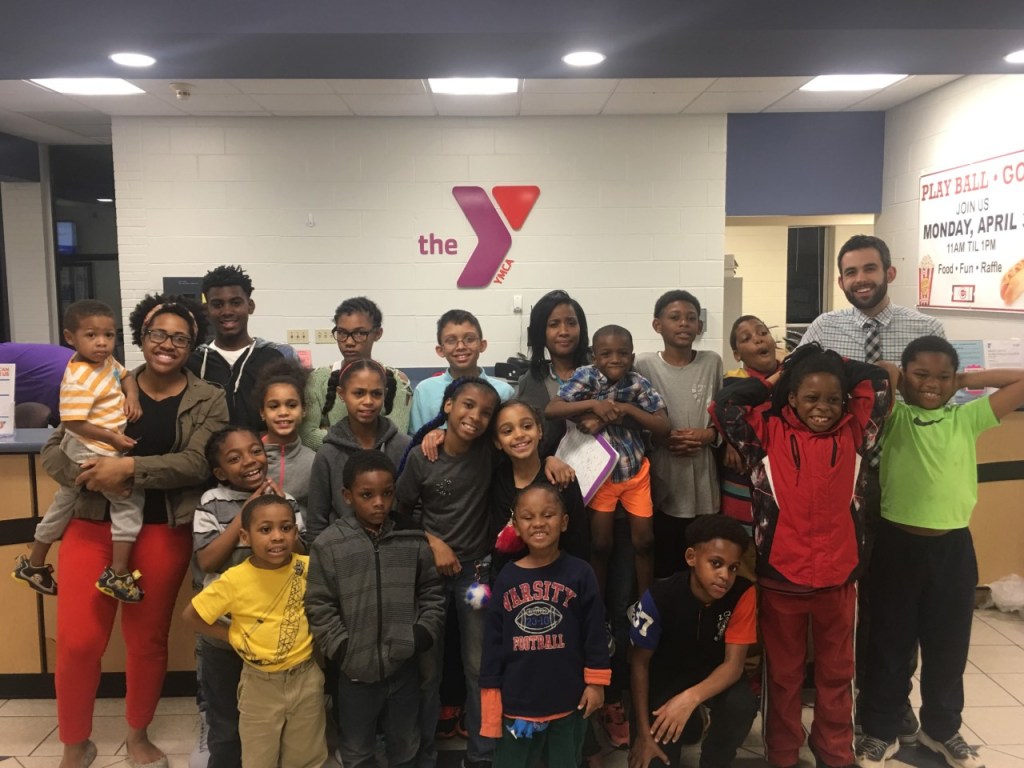
    Years ago, when I lived in Cincinnati and worked for the YMCA, a man named J.R. kept calling to find someone to help the kids in his housing complex. There had been a fire that shook the community, and he was determined to restore a sense of joy for the children. After several calls, his message finally landed in my inbox.

    We didn’t hold a planning meeting or wait for permission. We just showed up.

    The apartment complex gave us space, and I walked in—professionally dressed, coming straight from a full day of work—but I didn’t hesitate. I went straight to the floor, sat criss-cross applesauce with the kids, and asked one simple question: What do you want to do?

    Their answers came fast—swimming, basketball, even restoring old shoes. Every Friday night, we made it happen for over a month. We transported the kids to and from the Y, made sure they ate (thanks to local restaurants who donated meals), and had parents rotate as chaperones. It was simple. It was powerful. It was community in motion.

    And here’s the truth: I didn’t have time.

    At that point, I was the Family Life Director for an entire branch. I was overseeing six school-age programs, three preschool classrooms, a 200-camper outdoor summer camp, and all childcare operations at that branch. I was already working 12-hour days. Oh, and Owen was 4 and Aiden 2.

    But somehow, this extra thing became exactly what we all needed.

    It wasn’t on a schedule. It wasn’t on a grant report. But it brought me back to the heart of the work. That day—sitting criss-cross applesauce in dress clothes on the apartment floor with kids full of ideas—something shifted. The kids saw it. The parents saw it. I felt it. And I’ve carried it with me ever since.

    The kids exploring nutrition.

    That day—sitting criss-cross applesauce in dress clothes on the apartment floor with kids full of ideas—something shifted. The kids saw it. The parents saw it. I felt it. And I’ve carried it with me ever since.

    Because sometimes, what makes a moment meaningful isn’t how much time you have—it’s whether you choose to show up anyway. It’s about being willing to try something new, even when your plate is full. And when you show up with humility and consistency, the right people—authentic people—will feel it. That’s where trust is built.

    And trust is what turns a moment into a movement.

    The kids learning how to refurbish their old sneakers.

    As we think about what comes next in our sector, let’s remember:

    Not everything has to be scaled to have a significant impact.

    Not every solution has to start from scratch.

    And not every leader needs a title.

    Philanthropy can build bridges. Nonprofits can help pave paths. But where are the people already living the experience? They’ve often already imagined what’s possible. They need someone to show up and help bring it to life.

    Who are the J.R.s in your community—people with ideas, compassion, and commitment—who need someone to listen, believe, and follow through?

    Sometimes, the future is already trying to call. We have to answer.

    Thanks to all the people that made Kingz Kids possible! Community at it’s finest.

    Thank Mr. J.R. may you rest in peace. 🧡